
Log in or create a free Rosenverse account to watch this video.
Log in Create free account100s of community videos are available to free members. Conference talks are generally available to Gold members.
Leading through the long tail of trauma


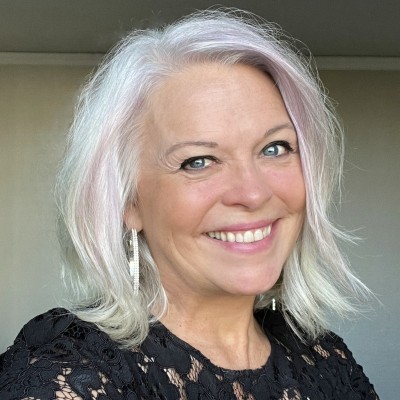

Summary
The fatigue and trauma from events of the past few years has affected many of us – not just personally, but also professionally, and at the organizational level as well. For the most part, the corporate world has recognized the impact these past years have had on employees and teams. However, many organizations have only recently become aware of the longer-term effects and are struggling to support their people as they work through the long tail of trauma In this special community call, produced in partnership by Rosenfeld Media’s Advancing Research and Enterprise Experience curation teams, Uday Gajendar facilitated a discussion about the long tail of trauma, with Rachael Dietkus, LCSW, Dawn E. Shedrick, LCSW, and Dr. Dawn Emerick.
Key Insights
-
•
Including people with lived trauma experience in research planning improves sensitivity and anticipation of trauma responses.
-
•
Asynchronous and nonverbal methods can reduce retraumatization compared to live interviews.
-
•
Building trust with community partners and service providers is essential when working with marginalized groups.
-
•
Trauma is deeply cultural, and assumptions about body language or participant behavior can lead to misinterpretation.
-
•
Frequent breaks and informal interruptions (like walking or sharing stories) help manage participant comfort.
-
•
Researchers must recognize their own risk of vicarious trauma and build self-care rituals including debriefing and therapy.
-
•
Having two interviewers on trauma-related studies helps manage unexpected trauma responses in participants and the researchers.
-
•
Organizational trauma-informed change must start with HR policies and leadership modeling vulnerability and flexibility.
-
•
Trauma-informed work must resist commodification that simply repackages old methods under new labels.
-
•
Trauma-informed care is a continual process of becoming, requiring humility, cultural responsiveness, and ethical responsibility.
Notable Quotes
"Trauma is not the external event, but how that event embeds in an individual's body."
"You can’t heal your way out of death or oppression by reforming oppressive systems; you must dismantle them."
"If you work with humans, you work with trauma; it’s inherent in human experience."
"People from different cultures have different ways of experiencing and showing trauma; body language is not universal."
"I’ve never gone into an Indigenous community alone; relationships and partnerships are vital."
"Consent is ongoing; check in repeatedly during interviews about participants’ comfort and willingness."
"Breaks equalize stress and can prevent trauma responses from spilling over."
"Self-care after trauma work includes debriefing, therapy, time off, and reconnecting with loved ones."
"Leadership modeling ‘being human’ with stress and mental health normalizes trauma-informed culture."
"Being trauma informed is not a destination but a journey of continuous learning and unlearning."
Or choose a question:
















More Videos

"Sometimes the solution perceives the problem in the eyes of users, especially in enterprise spaces."
Alexandra SchmidtEnterprise UX Playbook
December 1, 2022

"The hiring process typically includes two manager screens and a final interview with project presentations."
Jen Crim Jess Quittner Saritha Kattekola Alex Karr Gurbani PahwaCulture, DIBS & Recruiting
June 11, 2021

"It’s best thought of as a service and enabling role where you orchestrate people and bring out their best collectively."
Christian CrumlishAMA with Christian Crumlish, author of Product Management for UX People
March 24, 2022

"We turned design thinking on ourselves to tackle our own hiring challenges—applying tools meant for customers to our own processes."
Libby MaurerTreating Diversity & Inclusion in Hiring as a Design Problem
December 5, 2019

"Sustainability is not just about the environment, it’s about community."
Ali Jeffery Sheri ChudowHow DesignOps Helped Enable Wall Street to Work Remotely
October 22, 2020

"Hugh Dubberly argues we should stop describing design as problem solving and instead see it as engaged conversation."
Daniel GloydDesigning From the Inside Out: How Method Acting Can Inspire Design Research
February 12, 2026

"Every student has unique strengths that should be recognized and nurtured."
Kristin SkinnerFive Years of DesignOps
September 29, 2021

"Design strategy focuses on providing a framework for developing design solutions that support a given product strategy, whereas product strategy addresses the business model, the roadmap, and prioritizing requirements - Frank Guo."
Johanna KollmannInsights-Driven Product Strategy: Get your Research to Count
December 6, 2022

"Momentum in users is like energy in fluid—strong motivation drives fast, decisive movement."
David SternbergUncovering the hidden forces shaping user behavior
July 17, 2025
Latest Books All books









Dig deeper with the Rosenbot
How effective are AI-generated follow-up questions in usability testing compared to human moderators?
How important is human involvement in strategic insight generation despite AI advancements?
How can large enterprises design pilot programs that effectively test new research tools without excessive delays?