
SUS: A System Unusable for Twenty Percent of the Population
Summary
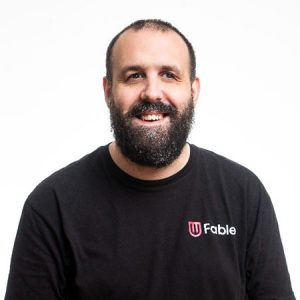
Did you know that the SUS creates biases in your research, affecting one in five people? That’s right! People with disabilities, especially those who use assistive technology, are not considered by most of the questions in the SUS. When the SUS was invented, the author encouraged people to change it to suit different needs. In this talk, Samuel Proulx and Abid Virani from Fable will discuss how Fable adapted the SUS to work for assistive technology users. Drawing from over five thousand hours of research and testing involving assistive technology users, we created the Accessible Usability Scale (AUS). This presentation will include trends in AUS responses since it was released in December of 2020.
Key Insights
-
•
Assistive technologies mainly split into screen readers, screen magnifiers, and alternative navigation devices, each with distinct user needs.
-
•
Screen reader users heavily rely on semantic web structure and proper labeling for efficient navigation.
-
•
Magnification users often supplement their experience with screen reader features to reduce eye strain.
-
•
Alternative navigation users use multiple input methods like voice commands and head mice, providing fallback options.
-
•
Traditional usability labs and standard SUS questionnaires fail to consider unique accessibility challenges and setup of assistive tech users.
-
•
SUS questions like needing technical support or learning speed are confusing or irrelevant to assistive tech users without adaptation.
-
•
Fable created the Accessible Usability Scale to better evaluate assistive tech user experience by adapting question language and scope.
-
•
Preliminary AUS data indicates screen reader users experience the lowest usability scores due to lack of backup input methods.
-
•
Remote usability testing greatly increases participation and authentic results by allowing users to test in familiar, customized environments.
-
•
User skill with assistive tech, experience level, and mental models vary significantly and must be considered beyond linear novice-expert scales.
Notable Quotes
"Assistive technology includes software and hardware that people with disabilities use to access computers."
"Screen readers let us jump directly to content, replicating visual skimming of a web page."
"Expert screen reader users listen at over 300 words per minute and still fully understand the content."
"Magnification can cover the entire screen two to ten times, and users pan around to see different areas."
"Many magnification tools also have screen reader functions to reduce eye strain and help users."
"Alternative navigation users might use voice commands, head mice, or grid coordinates to access elements."
"Traditional usability labs often force assistive tech users to use unfamiliar setups, creating barriers."
"I am a technical person, yet I might still need someone who can see to help me use certain sites."
"Accessibility is a spectrum; if frequent tasks require assistance, the product is inaccessible for me."
"Remote testing helps get closer to real-world results because users are in environments customized for them."
Or choose a question:









More Videos

"Kids love to play. They challenge the world through games and simulation, so the things we create need to support play and experimentation."
Nathan Shedroff Hugh Dubberly Thomas J. McLeishHow Will Design be Taught When the Schools Shut Down?
May 8, 2026

"Data is supposed to be neutral. It’s the way one uses it that can bring good or bad outcomes."
John Paul de Guzman10k Screens Later: How We Became a Data-Driven Design Organization
September 24, 2024

"Survey data should be treated as zero-party data that fuels personalized communications and lifecycle marketing."
Aleksandra Korczynska Caroline Jarrett Justyna ParmeeSurvey Tools
March 12, 2026

"Sustainable and flexible work tactics are key to navigating constant change without burnout."
Kristin SkinnerTheme 2: Introduction and Provocation
January 8, 2024

"This conference felt like a professional bootcamp that helped me grow profoundly as a speaker and thinker."
Rachael Dietkus, LCSW Victor Udoewa Jennifer StricklandEverything You Need to Know about the Civic Design 2022 Call for Presentations
May 17, 2022

"Enterprises are places where one hand doesn’t know what the other hand is doing and sometimes despises it."
Uday GajendarThe Rise of Meta-Design: A Starter Playbook
May 19, 2022

"What's weak feedback? Vague, off target, or late stuff like make it pop or opinions with no owner or next step."
Vanessa VarinFeedback: The Other F-Word
September 10, 2025

"We are moving from direct work to mediated work, from wanting things perfect to good enough for now, and from complete to adaptive and growing systems."
Hugh DubberlyProblems with Problems: Reconsidering the Frame of Designing as Problem-Solving
June 19, 2019

"Balancing risk and confidence helps teams move at the right speed for the right decisions."
Sean McKayCoexisting with non-researchers: Practical strategies for a democratized research future
March 11, 2025








